The studio behind everon.one

We build the things we host

Websites, web shops, mobile apps, custom software and 3D — from the same team that runs the servers underneath them.

  • Six areas, one team Design, web, commerce, apps, cloud, care.

  • A demo every week You watch it get built, not read about it.

  • A fixed quote before we start Priced after discovery, not by the hour.

  • Hosted by the people who built it On our own hardware in Finland, in the EU.

The studio

One team, from the first sketch to the running server

Everon designed and built software long before it ran servers. We make web platforms, online shops, mobile apps, internal systems and 3D work, and then we put them on infrastructure we own and run ourselves. The people who wrote the code are the people who answer when you call about it.

That is the whole argument for having one company do both. A hosting problem and an application problem look identical from the outside, and when two suppliers own them you spend your week proving whose it is. Here there is one team, one invoice, and one answer.

How that works day to day is simple enough. You see the thing every week. Not a status report and not a percentage, but the actual site or app running in a browser you can click around in. It is harder to hide behind a working demo than behind a document, and that is the point of doing it that way.

Money works the same way. We spend the first part of a project working out what you actually need, and only then do we give you a price. It is a fixed one. If we get the estimate wrong, that is ours to absorb rather than a line on your next invoice, and it means nobody here is paid to take longer than the work needs.

What we build

Six areas of work, under one roof

Design & creative

3D visualisation, branding and interface design — the visual groundwork everything else stands on.

  • 3D and product renders
  • Architectural visualisation
  • Branding and identity
  • UI/UX and design systems

For brands launching a product, marketing teams, real estate, early-stage startups

Websites and digital presence

Sites that load fast and say what they mean — WordPress, Webflow, or built from scratch.

  • Marketing websites
  • Landing pages and micro-sites
  • CMS and custom themes
  • WordPress and Webflow

For small businesses, local services, and companies whose site no longer matches them

Online shops

From a Shopify storefront to a platform of your own, wired into the payment and stock systems you already use.

  • Shopify and WooCommerce
  • Custom commerce platforms
  • Payment gateways
  • ERP and stock integration

For retailers, direct-to-consumer brands, and B2B distributors

Web and mobile apps

Custom applications, apps for phones, and the internal tools a company actually runs on.

  • React, Angular, Node
  • iOS and Android
  • Cross-platform builds
  • Dashboards and portals

For growing companies whose work no longer fits in a spreadsheet

Cloud and SaaS engineering

Software sold as a service, from first version to the point where thousands of people depend on it.

  • From MVP to scale
  • Multi-tenant architecture
  • APIs and integrations
  • Interactive 3D in the browser

For startups and established firms building a subscription product

Support and care plans

What happens after launch: updates, audits and design work on call, on infrastructure we run ourselves.

  • Monthly care retainers
  • Security audits
  • Performance tuning
  • Ongoing design and web work

For clients who would rather have one team on call than four suppliers to chase

How we work

From idea to production, in five steps

  1. Discovery and strategy

    3–5 days

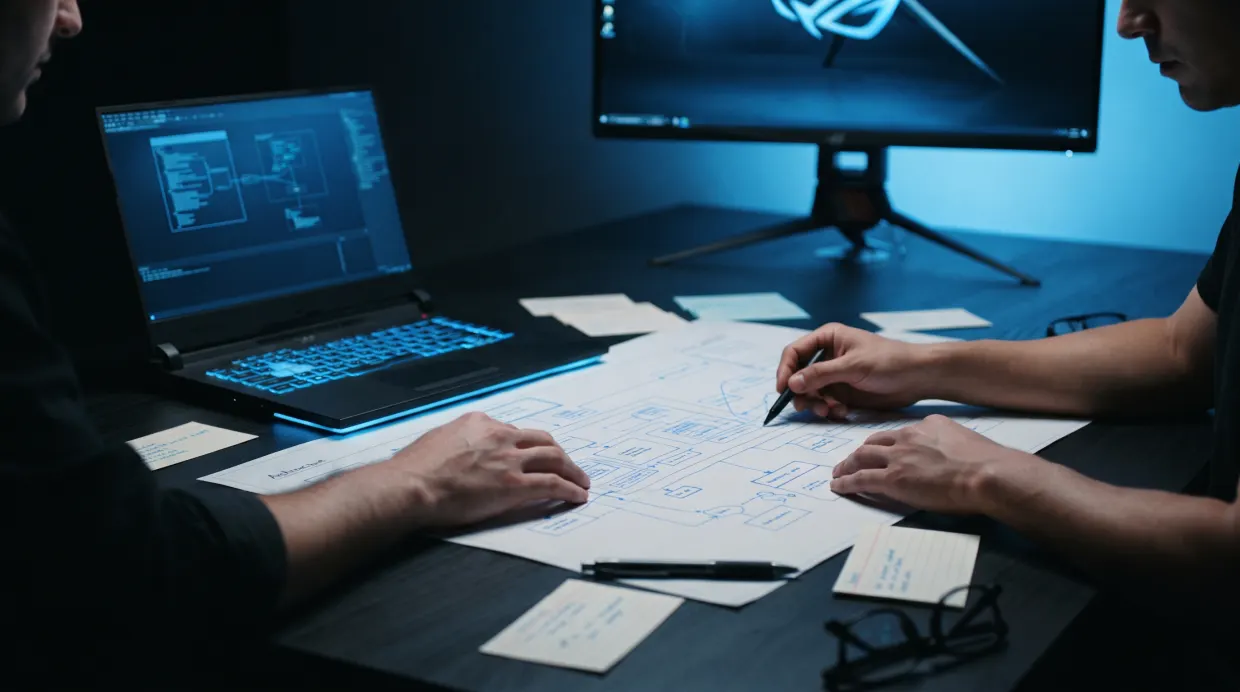
    We work out what the thing has to do and who it is for, then hand you a plan with a fixed quote attached. That means time with the people who will actually use it, a map of the screens and the data behind them, and what is out of scope named as plainly as what is in.

  2. Design and prototype

    1–2 weeks

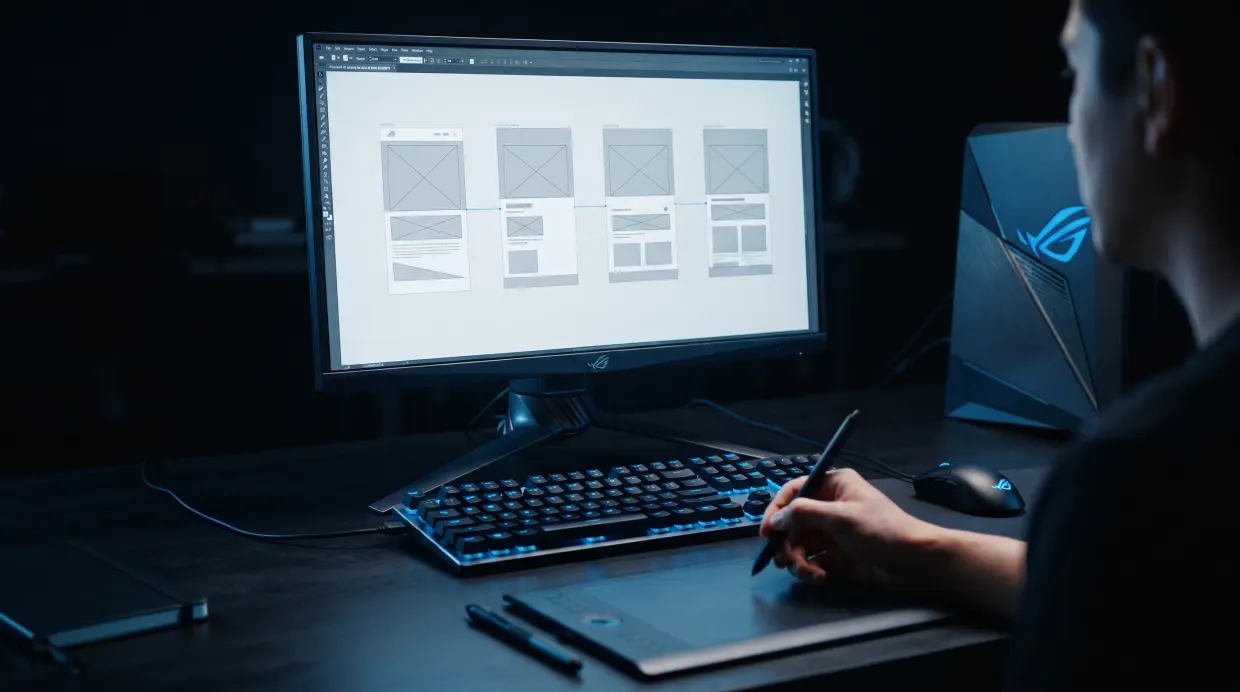
    Wireframes first, then a clickable prototype you can walk through on your own phone. You approve how it looks and behaves before anyone writes code, because moving a button here costs an afternoon and moving it after the build costs a week.

  3. Development

    4–12 weeks

    Short sprints with a working demo at the end of each one, so you always know exactly where the project stands. The demo is the running application on a real server rather than slides about it, and the link stays open between calls.

  4. Testing and QA

    1–2 weeks

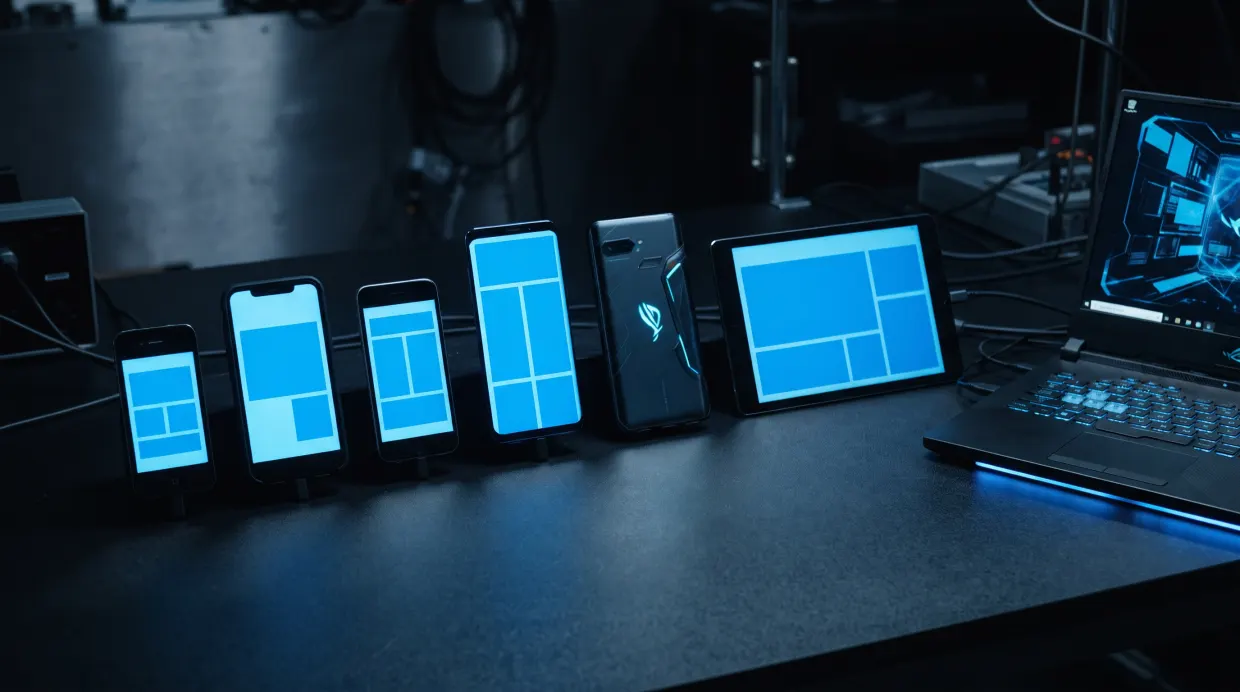
    Real devices and real scenarios: speed, security, and the unglamorous details that decide whether people stay. Old phones and slow connections included, because that is what a good share of your visitors are actually on.

  5. Launch and support

    ongoing

    Deployment, app store submission, DNS, and the hosting underneath it if you want that from us too. We are still reachable the week after, which is when it matters, and the person who answers is the one who wrote the code.

Built by Everon

Five we designed, built and still stand behind

  1. Booking and back office

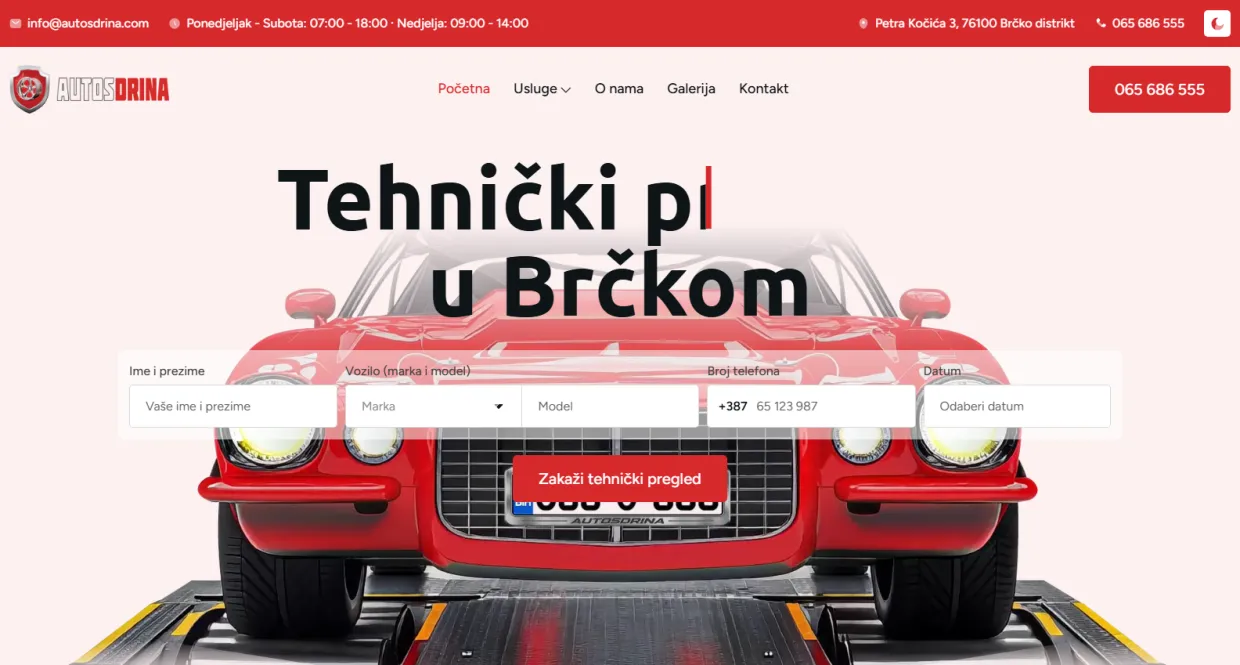
    AutosDrina

    A vehicle inspection station, booked from the front page.

    Take the queue off the counter. Customers pick a slot for a technical inspection in the hero form itself, and the office runs its commission sale contracts from a panel built for that job alone.

    1. Discovery Two systems inside one business: the booking a customer sees, and the paperwork behind the counter.
    2. Design One red against near-white, and a single family in two weights. Every page is the same stack: a card, a price, a button to book, so a returning customer never learns a second layout.
    3. Build Plain PHP 8.2 and MySQL, no framework. Contracts are drawn as PDF on request rather than written to disk, which had grown past 30 GB.
    4. Ship Live in Brčko, with the appointment calendar and the contract panel on one host.

    • PHP 8.2
    • MySQL
    • TCPDF
    • FPDI
  2. Online shop

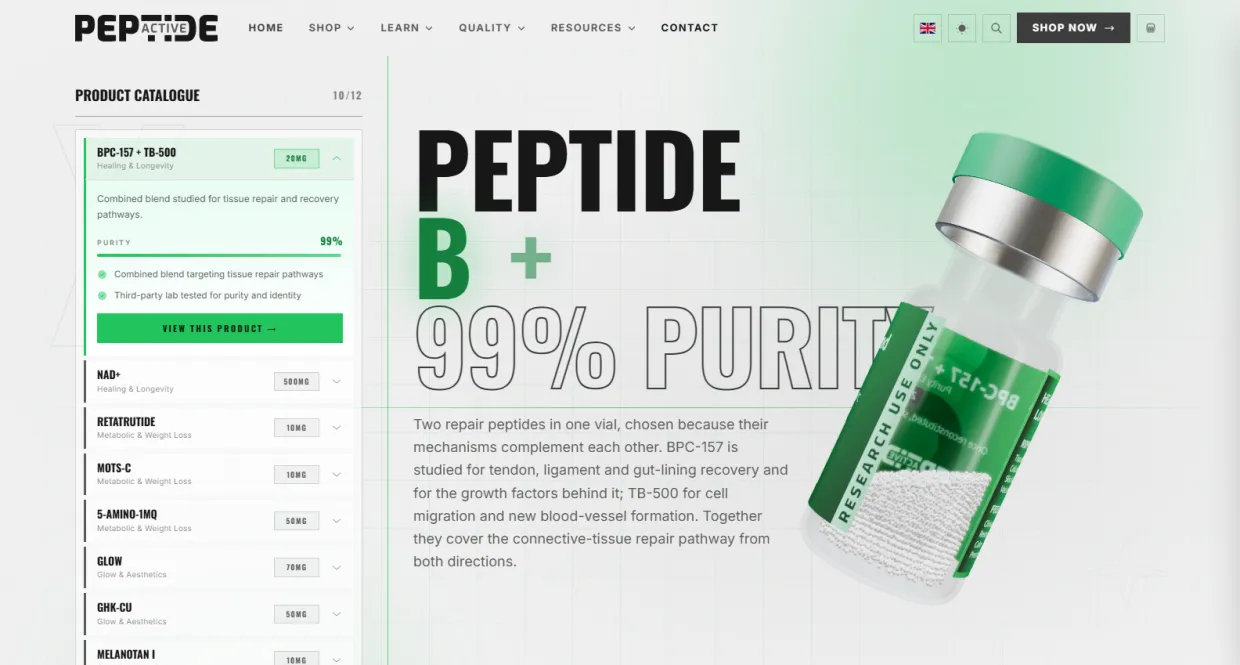
    Peptide Active

    A research peptide shop that leads with the vial.

    Buyers compare purity and lab reports long before they compare price, so the catalogue puts both in front of them and lets the product do the selling.

    1. Discovery Purity, dose and third party testing decide the sale. Price comes fourth.
    2. Design Clinical rather than pharmaceutical. Every compound page carries purity, dose and a lab link in the same fixed order, so two of them can be read side by side without hunting.
    3. Build A static front end with PHP endpoints for orders, contact and the newsletter. The subscriber list is denied to the web.
    4. Ship Deployed to cPanel with cache busting, so a returning visitor sees this release rather than last month one.
    • three.js
    • WebGL
    • glTF
    • PHP
  3. Lead generation

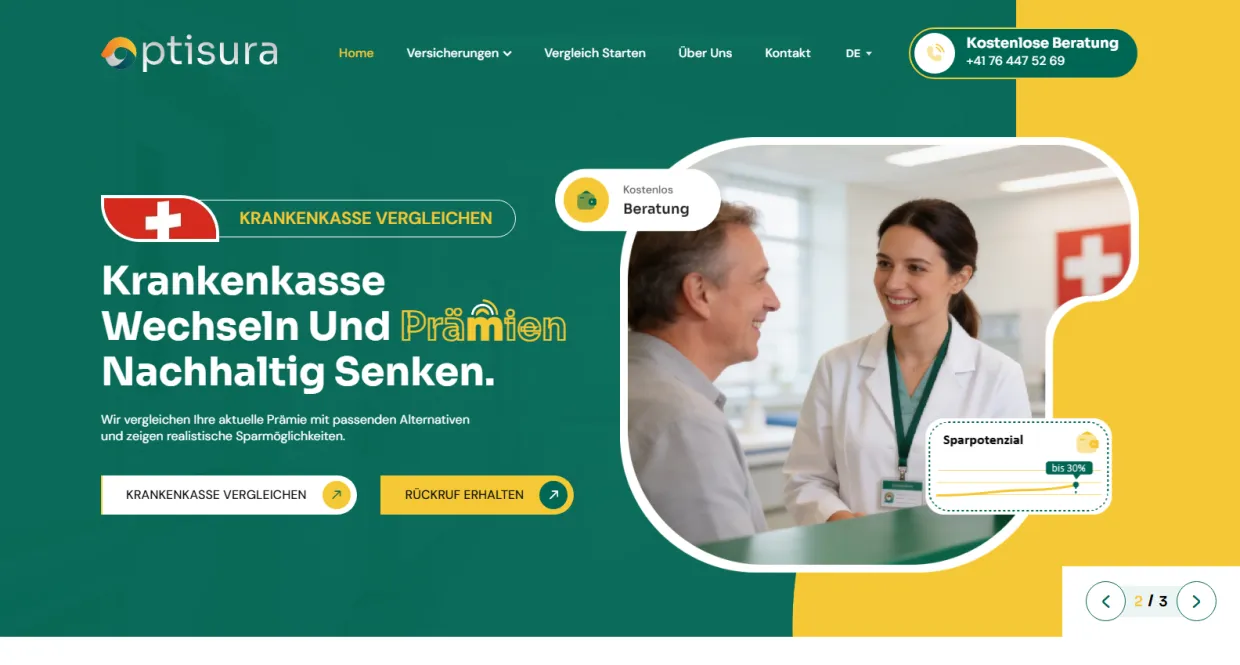
    Optisura

    Swiss health insurance, compared and switched.

    Turn a premium that went up again into a booked callback, by comparing what somebody pays now against real alternatives and showing what the switch is actually worth.

    1. Discovery The decision is annual and regional, so the site had to speak to a canton rather than to a country.
    2. Design Trust colours and a great deal of air. The same three step path to a callback appears on the home page, on every canton page and inside the calculator, so the route never changes under somebody.
    3. Build PHP and MySQL behind a page for each canton, in four languages.
    4. Ship Live with the premium calculator, and every enquiry landing in the back office.
    • PHP
    • MySQL
    • Four languages
  4. Corporate site

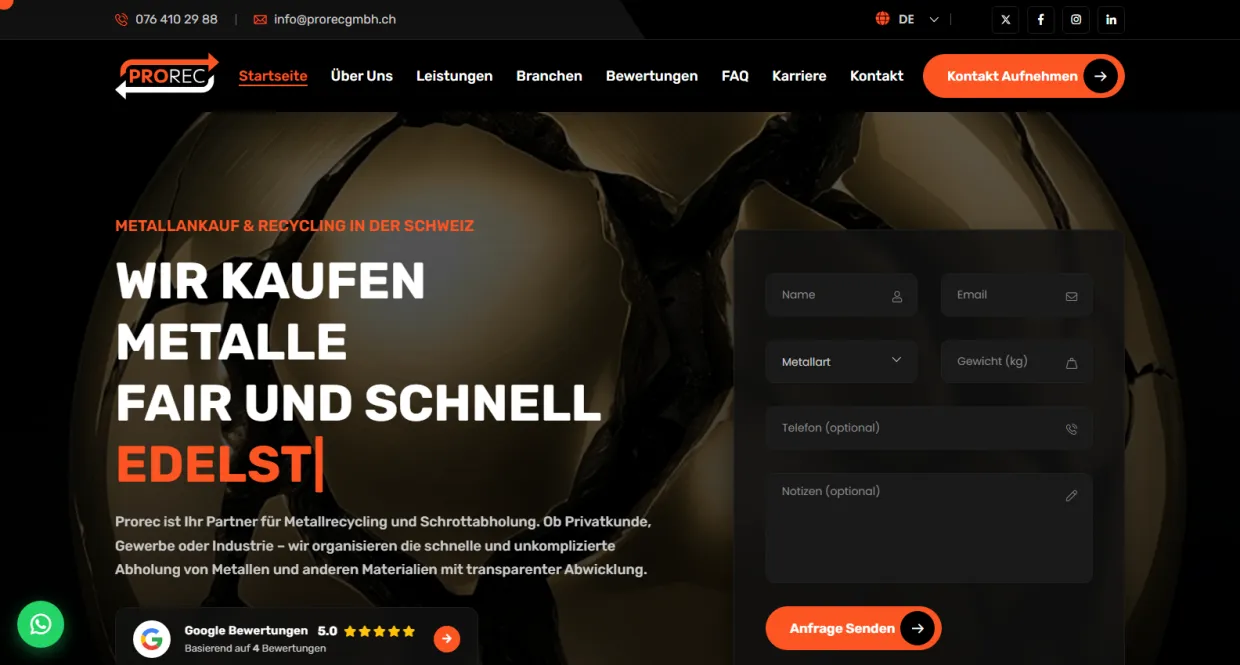
    Prorec GmbH

    Metal buying and scrap collection across Switzerland.

    Get a collection request out of a stranger inside one screen, and satisfy Swiss law while doing it.

    1. Discovery A regulated trade. Data protection, identification duties and waste handling all had to be answered on the page itself.
    2. Design Dark and industrial, with one orange doing all of the pointing. The quote form repeats at the top and bottom of every page, and the metals catalogue reuses a single card so a hundred materials need one layout.
    3. Build PHP in four languages with hreflang, structured data, and a consent log written server side.
    4. Ship 158 images converted to WebP, 8.2 MB and 65 per cent lighter, shipped behind security headers.
    • PHP
    • JSON-LD
    • WebP
    • Four languages
  5. Ordering app

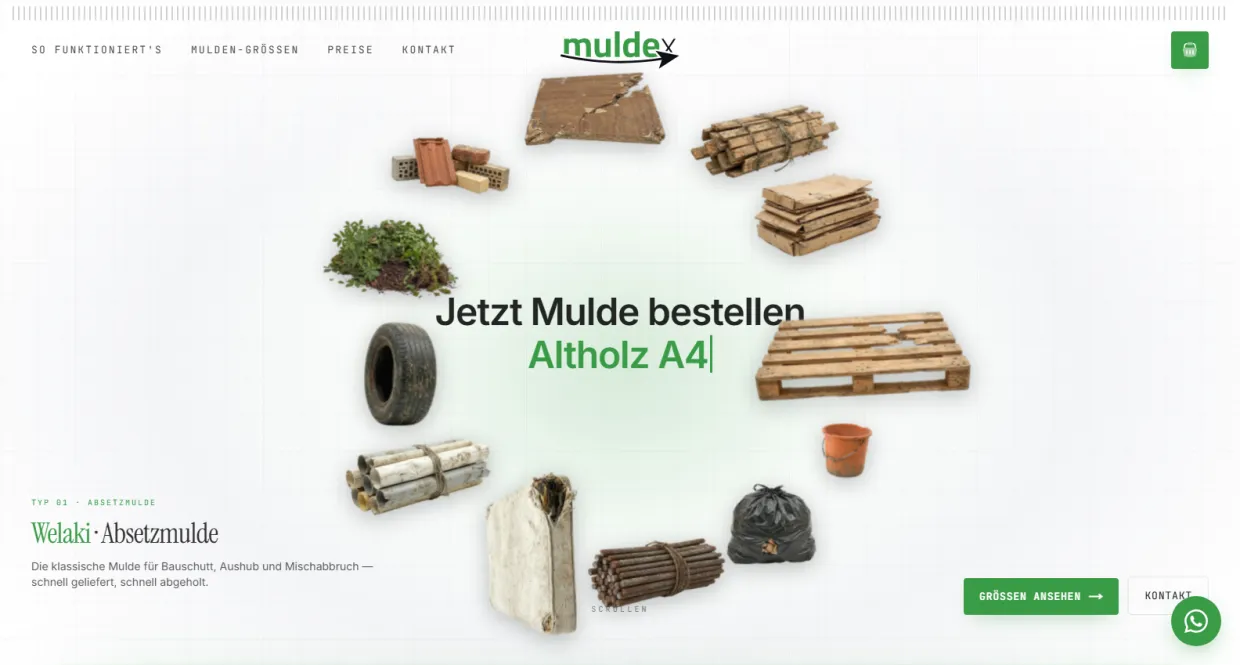
    Muldex

    Skip hire, chosen by scrolling through the sizes.

    Let somebody pick the right skip without knowing the vocabulary, by showing five sizes as objects and naming the waste each one takes.

    1. Discovery Customers do not know which size they need, so the site has to answer that before it asks for an order.
    2. Design An editorial treatment of an industrial subject: serif headings against wide tracked labels. The five sizes are one component reused throughout, with the 3D object explaining what a photograph could not.
    3. Build Next.js and React Three Fiber, with GSAP reveals riding Lenis smooth scroll.
    4. Ship Running on Node under PM2, on hardware we own.
    • Next.js
    • React
    • Three.js
    • GSAP

Before you ask

The questions we get first

How does the fixed quote work?

After a short discovery call we put a number and a scope in writing. The number does not move unless the scope does — and if you change the scope, we tell you what it costs before we build it, not after.

How long will my project take?

The five steps above carry real durations. In practice a marketing website runs three to six weeks end to end, and an application or a platform two to four months. You get a demo every week either way, so the estimate is never the only thing you have to go on.

Do I have to host with Everon?

No. What we build runs anywhere, and we will hand it over ready to deploy wherever you like. Hosting with us simply means the people who wrote your code are the people who answer when something breaks at nine on a Sunday.

Who owns the code?

You do, on final payment — repository and all. No lock-in, no licence that expires, nothing held back as leverage. It is the same promise the hosting side makes about your files.

Which languages do you work in?

English, German and Bosnian — the three this site is written in. We can build and maintain your project in any of them.

What happens after launch?

Whatever you want to happen. Some clients take a monthly care plan — updates, security audits, performance tuning and design work on call. Others take the keys and call us when they need us. Both are fine; neither is assumed.

Can you take over a project someone else started?

Often, yes. We start by reading what is already there and telling you plainly what we find, because an audit is cheaper than a surprise three weeks in. Sometimes the answer is that the work is sound and needs finishing. Sometimes it is that rebuilding costs less than repairing. You get that assessment either way, and it is yours to act on with us or without us.

What do you need from us to get going?

Less than most people expect. Somebody on your side who can make decisions, whatever you already have in the way of text, images and brand material, and access to anything the project has to connect to. If the text is not written yet, that is normal, and we plan around it rather than waiting for it.

Do we get to talk to the people building it?

Yes, and there is nobody else to talk to. The team is small on purpose: whoever answers your question is the person who wrote the thing you are asking about, so nothing is relayed through an account manager in either direction and nothing is lost on the way.

Tell us about the project

A short discovery call comes first, and the quote after it is a fixed one. Nothing here reaches anyone but us.

Sending…

Thank you. Your message is with us and we will reply shortly.

Please fill in the name, email, subject and message.

That email address does not look right.

That is a few messages in a short time. Please try again a little later.

The message could not be sent. Please write to studio@everon.one instead.